Episode Transcript
[00:00:01] Speaker A: You want to be surprised, you want to be engaged, and then you want to bring these products home. You want to have a product that represents you, that is not the same as the one of everybody else. That's why we choose our chairs, our tables, our light in our homes with such a care, because we want to define ourselves through those products. The same care we use to pick a car, to choose a car, to choose the color of the car and the trim of the interiors of the car. But then you buy a TV and they all look the same. Why? Who's saying you buy a phone, they all look the same. Why?
So we need to evolve this. And again, Samsung, before even I arrive, has been experimenting in this way.
[00:00:46] Speaker B: Welcome to this English language edition of Chapter Talks Design, a podcast from Chapter magazine. In each episode, we speak with leading voices from contemporary design culture, from mobility and product design to architecture. Our conversations explore individual design philosophies, sources of inspiration and personal success stories.
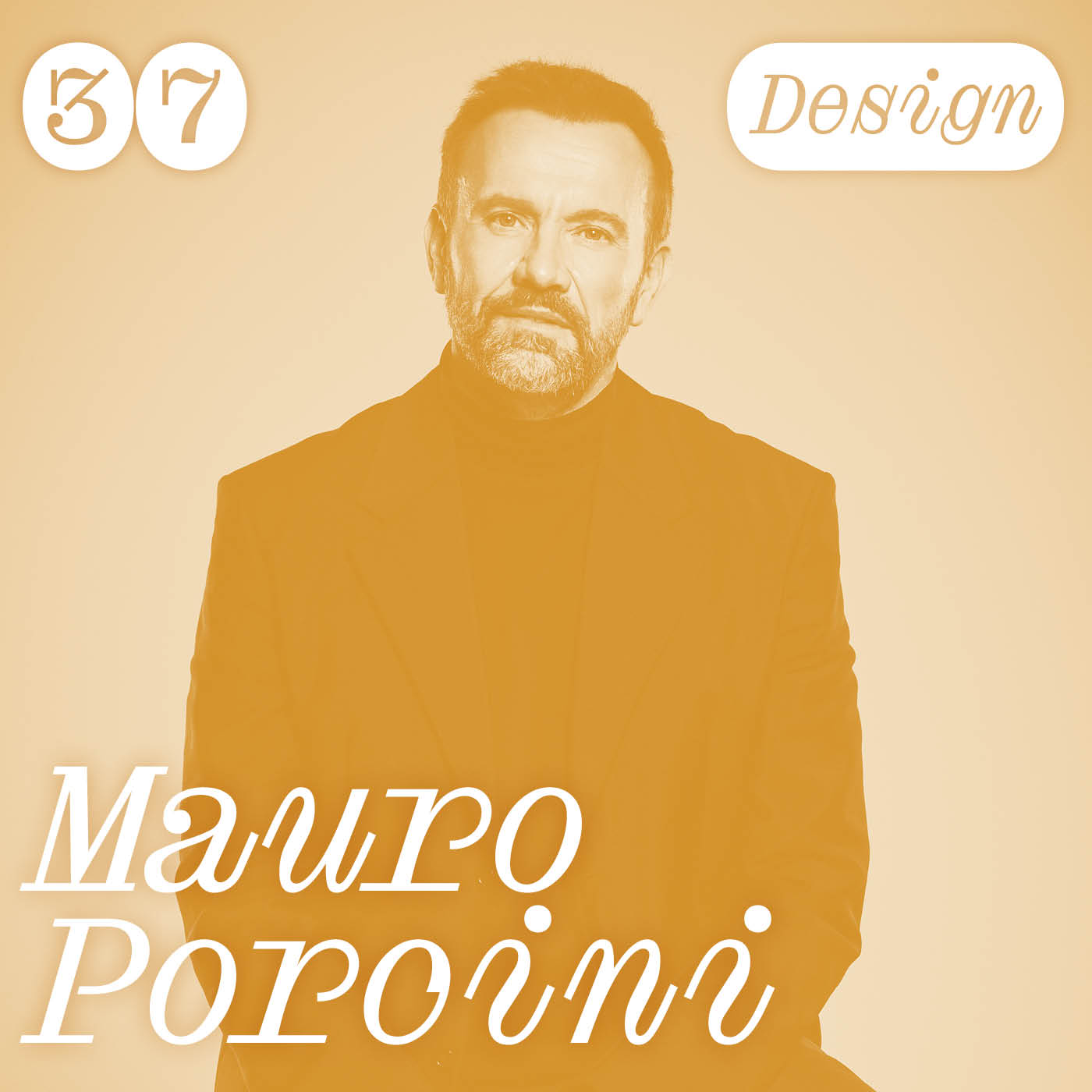
My name is Timo Schmidt. I'm the design director at Chapter and our guest today is Mauro Porcini, the first ever president and Chief Design Officer in the history of Samsung Electronics. Before joining Samsung, he held leading design roles at PepsiCo and 3M, where he helped bring design closer to business and technology.
At Samsung, he now leads the design vision for many of the products people use every day, from smart smartphones and TVs to home appliances and new AI experiences. Today we speak with him about technology, human centered design, and what the future of Samsung could look like.
Yeah, I'm super honored and super happy to have you, Mauro, for this conversation today. I think this is going to be our longest distance recording in the history of this podcast. You're based in Seoul? I'm out of Berlin, so yeah. Good afternoon to you in Seoul.
[00:02:03] Speaker A: Thank you for having me. Yes, you're right. If we will take a plane, it will take around 13 hours at least to get there. So.
[00:02:12] Speaker B: Yeah, long distance greetings to everyone who's on a long distance flight right now listening to this. Maybe. Yeah. You relocated not so long ago from New York to Seoul. A big cultural break and obviously also a big opportunity to. For you to adapt to a different lifestyle and culture in Seoul. So how is this going?
[00:02:37] Speaker A: Well, it's very exciting. You know, I. I'm Italian. I grew up in Italy in a family that didn't travel too much. And then I found myself projected into this global world, moving to the United States, to Minnesota, first to New York. After I'm. I am today both an Italian citizen and officially Also an American citizen.
And in all these years working with teams all around the world, when I was at PepsiCo, I had teams in 18 cities all around the world. Today at Samsung, we have teams in multiple cities, you know, representing every region, every continent of the world.
I became somehow what I call a global citizen. You know, I'm not just Italian anymore. I'm not American.
I feel like I belong to the world. And now if you look at the world in the way, there are few cities that are really very important, very iconic in the way they are shaping culture in the world. New York for sure, is one of those. Soul is for sure. Another one.
All the K pop in music, what they're doing in cinema and movies, cosmetic, retail, obviously, consumer electronics, automotive, is incredible, Is incredible. So even though the culture somehow, superficially is very different, the Korean culture from the American culture, from the Italian culture, I feel, anyway, part of a city that is like a global piazza that is somehow shaping culture around the world. And this is really, really exciting. On one side, I'm learning new things every day. On the other side, I'm still part of this global conversation I was part of when I was in New York City.
[00:04:30] Speaker B: Yeah, I mean, you moved your whole family there. Your kids are growing up in Seoul now. To me, it's really exciting. I love Seoul. I've been a few times, actually, also for work.
So I totally get what you're saying. It has so much to offer and there's so much to discover and learn.
Must be really exciting.
[00:04:50] Speaker A: Well, no, absolutely. My kids are born in New York City, so they are American citizen. There is a new law in Italy that because. Because both my wife and myself were both dual citizens, American and Italian, I can't give them the Italian citizenship right now. That is somehow very interesting as a law, but I'm gonna be able to do it through my parents.
But, you know, they're really, really Italians in their behaviors in.
They're making pizza every Sunday as an example already. You know, one is four years old, the other one is one and a half. But both help mom and dad making pizza on Sunday. There is this very Italian behaviors and habits and culture. But they're growing up now in Seoul. They're surrounded by kids from Korea and kids from every region of the world. It was like this in New York. It's like this now in the international schools here in Seoul.
So, yeah, they're growing like global citizens. And this is something fantastic and is a wonderful gift that I think we're giving them. I also have three dogs and two of them, I mean I, I got all of them in New York City, but two of them were born in Korea and they got in New York not, not expecting ever to move to, to Korea.
And then life is unpredictable and, and so I brought them back home to where everything started from them. And that's really, you know, an interesting story.
[00:06:30] Speaker B: That's really funny. Yeah, yeah, yeah. We're going to talk about your work at Samsung today and looking at your career, it's to me really interesting that it's now actually the third time you're joining such a major company and a role is being created for you, the role of Chief Design Officer. So it seems like you really, you really impersonate this role and you really own this role. This is happening for the third time now and I'm sure every time it's been entirely different. So tell us us about your work at Samsung, about your arrival at the company and what happened since.
[00:07:11] Speaker A: Yeah, look, my interpretation of the role of Chief Design Officer is the one of a leader that together with these teams is focusing on creating value for people, value for humanity.
Not just from a social standpoint, but literally observing human beings, people, users, consumers, customers, whatever you want to call them, and creating something that add value in their life.
A product, a solution, an experience, a brand, a service that is functional, that is beautiful, that is somehow useful, that is meaningful, that help them in a variety of different ways in what they do.
And then that's the starting point. Then you reconnect the kind of focus and the kind of intention to the world of business and to the world of technology.
So we put people first. What they desire, what they want, what they need is the first consideration. But then we try to understand how to leverage technology, manufacturing capabilities to create that kind of solution.
And if we have them in our is great. If we don't, we're going to develop them. If or eventually you can acquire them or build partnerships with other companies and brands. And then there is the dimension of business. How can I make money out of it? How can I grow a brand with that kind of approach? So these are the famous three lenses of design thinking. Desirability, feasibility, viability.
And this kind of approach can be used and leveraged in any kind of industry, in any corner of the planet, wherever you are.
The idea is you start with people and then you understand how to use the other lenses.
With that kind of approach. Design in these companies become the voice of people, the ambassadors of humanity inside these organizations. And you as a designer connect and talk with people. With different kind of backgrounds, belonging to different kind of communities that try to solve similar problems but with a different lens. So the business world will put the business lens first. How can I increase revenue, profitability, how can I support my brand, how can I gain market share? And they will put people after, you know, people become a lever, Technology is a lever. But my goal is to grow the business.
The people working in R and D, they will start with technology and they will understand how to advance technology, how to change your manufacturing capabilities, how to create patents that are incredible, valuable, defendable. And then from there they will understand how to build business value and they will understand how through those technologies serves individuals, human beings. But again, the way I'm positioning design in these companies is really the voice of humanity in the organization and how to build business value, financial value, by creating first human value. That's really the kind of interpretation I have for this role of chief Design officer.
[00:10:35] Speaker B: So what you did at 3m and PepsiCo also was to build what you would probably call design cultures in companies that weren't naturally like homes for design thinking. And it sounds like you. It's also a bit similar at Samsung.
What as an outsider arriving in these companies, let you see what's happening inside, what insiders have stopped seeing really. You know, what's the first thing you see when you come to a company like Samsung?
[00:11:07] Speaker A: Look, there is a difference between Samsung and 3M and PepsiCo. 3M and PepsiCo didn't really have an established design capability and they were not leveraging design as a driver of differentiation of the products.
One company, 3M was really tech driven, the other one, PepsiCo, was really marketing and brand driven. And so I created this capability and this approach from scratch here. I came with a company that's been leveraging design over the years in an incredible way, especially the design of products and design of user interfaces and user experiences.
The past chairman announced two different design revolutions in the 90s and early 2000s to really drive the evolution of the business and drive transformation in the business.
And it's been very successful in doing that. Design was a key part of the transformation of Samsung from an OEM first and then a producer of entry level domestic appliances and products in consumer electronics to become one of the most iconic leaders in the world. Design was a key driver of this.
The challenge that we have today is that the world keeps changing and evolving and the speed of light, the, the way we interact with people is more global than ever.
Competition is more aggressive than ever. There is the world of startups and new products and new brands that keep arriving.
China is playing a completely different role than 10 years ago or 20 years ago or in the past.
So the landscape is changing dramatically. On top of it, artificial intelligence, robotics is about to change everything over again.
And so design needs to evolve with the world that is evolving around us.
And this human centered approach that have been advocating for and pitching all my life is something that management of Samsung thought could, could have brought value inside the organization. Elevating design from very incredible products, incredible experiences with our digital and physical technologies, to something that is even more meaningful in the life of people, more holistic from, you know, starting from the meaning of the brand, the story that we tell you through these products, and the interaction and experience have with these products to make technology as meaningful as possible in your life today. In a world that is polarized. On one side, there is a lot of excitement for what technology can do in our lives or what AI can do in our lives, and robots and new technologies that will come in the coming years. On the other side, there are concerns. There are concerns that AI may take my job, that AI may erode my human qualities, that the AI may eventually become even a trap to humanity in the most negative interpretations of what AI can do. And so the role of design is the one of taming this technology, the service of humanity, the one of putting people first all the time in everything we do in the company. When we design new products and new experiences and we think about our, how our portfolio is evolving, the idea is that we put always people first and we use technology to really create value in their lives. And we created these four different categories that we want to focus on. The idea that we want to help people living longer, better, loud and on. Living longer means that we want to use technology to help people with their mental and physical wellness and health. And also we want to use technology for the safety of our body, of our loved ones, our pets, the safety of our belongings, the safety of our home. So this is all about living longer, living better.
Is technology to do things on your behalf, like robotics and AI, or eventually to do things with you, but in a much more productive way so that you can carve out time to do what mattered the most to you, to live better. And to do what mattered the most to you may mean going and walk in a park with your kids, or read a book, or go to the gym, or just relax, meditate, sleep, whatever you want.
Essentially, it's technology to free you up from technology and enable you to do again what is Important to you. Live Loud is all about creativity, expression, imagination.
And it goes from the creation of content for your social media, to the creation of art or music, all the way to the creation of a business, a startup, from the comfort of your living room, using technologies and then finally live on is all about preserving memories. And we do it already today by preserving pictures and videos of ourselves and our loved ones.
But more and more because of AI, we'll be able to create digital twins of ourselves and the people we care about.
And these digital twins will be able to connect us with these people, no matter where they are, if they are eventually in the other side of the world or they are not available to us in a specific moment, or eventually even when they're not gonna be with us anymore in this planet, we're gonna be able to recreate the thoughts, the emotions, the memories of these people in a variety of different ways. The way I explain this to my fellow designers in the company is imagine when my parents are in their 80s and I hope they're gonna live a long life, you know, 50 more years. But when they're not with me anymore, I would love to still have the possibility to ask my father, what would you do in this difficult moment if you are me? Or ask my mom, what was the recipe of the carrot cake that you used to do when I was a kid? And so that's what Live on is about. But you see four categories to create value with a big focus on people. Humanity is what we're trying to do with design.
[00:17:56] Speaker B: The progress of technology you're describing on a global level, and of course also internally at Samsung, with this great engineering strength of the company, it sounds like there's also being put a lot of pressure on design, like designing these experiences, you're describing these possibilities seems like a really, really big task because it's kind of like touching on the most, like the core of life in a way. You know, memory, love, relationships.
So to me, this is an incredibly big respons responsibility. Also, how do you deal with it personally? And how do you brief your teams with these big responsible tasks?
[00:18:43] Speaker A: Well, before anything else is an incredible privilege and excitement. You know, when. When both myself and my teams face moments of difficulties, challenges, we feel the pressure.
I remind myself, I remind the team that we are lucky. We are incredibly privileged to work on one of those few mega corporations that are going to define the future of society through technology.
And for me, this is a dream job. And again, in the difficult moments, we need to remember ourselves that to be here is Really a privilege.
So again, before anything else is about having that kind of opportunity. Now, with that comes the responsibility.
The responsibility not just in front of the company, but the responsibility in front of humanity.
Technology can be used in a good way or can be used in a negative way, not just from the collective communities, but from every individual.
You can give a mobile phone to people and they can use it as a tool for productivity, a tool to be connected with the people they love.
You can use, you know, in my case, I use the mobile phone to be very close to my family, that is in Italy, in the United States, through, you know, all kind of apps, from writing each other to video calls. I use the phone to share my ideas and my philosophy through social media. I use the phone to compose music. I use the phone in so many different ways.
But you can also have people that are slaves to their phones, that spend the entire days on their phones. They use the phone as a gate to reality, and they disconnect from friends, from family members.
And so our role is to make sure that we remind the world, we remind our users, we remind society all the time that technology, a phone, is just a tool.
But what really is important is the values that define our lives, the habits that we have. That's why I always talk about love and care and kindness and curiosity. A series of values that define both the innovators, so the designers, the business leaders, entrepreneurs, the way they design their products, technologies, experiences, to put them at the service of humanity.
But it's also about the people, the users, the society, the conversations we should have with the media, with all kind of platforms used to communicate, reminding everybody that the conversation shouldn't be about technology, yes or not, Robots, yes or not, AI, yes or not. But it's all about how you use all of this. AI is an incredible way to help us in our lives. It can really make our life better, but it needs to be used in a responsible way, in a good way from everybody, from companies, from brands, from governments. But mostly it all starts with us, users, people, the way we use those technologies and those products. A journalist asked me recently, well, you want to create more technology? We already have these phones. We wake up and, you know, many people, instead of kissing their wives, they're there, attached to the phone. From the very beginning, my answer was, is the problem the technology? Is the problem the phone? Or is the problem the person that does that? Because I don't do that. You know, I, I find the right balance to make sure that I, I have time for my kids, I Have time for my wife, I have time for the people I care about. But obviously this needs to come from within.
You need to look at these technologies and any product, even the non technological ones, as tools, as platforms, as means, as ways to do something.
But what you do with it is driven by your intellect, by your heart, by your soul, by your values, by what you think is important in your life and in the life of the people you care about.
[00:23:15] Speaker B: And where in this process comes design? Or how would you say does design interact in this, in this relationship?
[00:23:26] Speaker A: Well, design once again is all about caring for people, is what, what we study at school. So any designer of the world at school learn to observe people, understand what they may need, what they may want, what they may desire and they are not even aware of.
And this could be applied then to a chair, to a phone, to a car, to a brand, to an experience in a store, to a service, to anything.
So you study what people may need, what are their frustration or what they may desire, and you create a solution.
So once again, by definition, we are trained to solve human needs. By doing that, the designers with the right empathy, the designers that are, you know, nice human beings, they end up falling in love with those users. They end up looking at the person using the car. You design this chair, you design the store, you design or whatever, you design as if they were their kids or their parents or their significant others, their loved ones. And so you want to make sure you design something incredible for them, something that is useful, that is beautiful, that is inspiring.
And so this is what drives designers with the right mindset. And so this is how design come into place. Design is that obsession we creating something that really creates value for society.
And if you are in a company, in any kind of company, in any industry, in any region of the world, and you work in a company industry, product category where products are not ideal, where maybe they're functional but they're not beautiful, maybe they are functional and beautiful, but they're not sustainable or they're not meaningful or they're not healthy society. Well, designers in this kind of companies, they are, they try to modify the product, they try to evolve the brand, they try to evolve the overall company, the overall industry, the overall product category to go in the right direction. It doesn't mean that you're going to be able to do it from night to day. This is more about a long term project that give meaning to your life, they give purpose to your profession, that they really push you when you wake up to go to work with a Lot of energy and saying, okay, I'm gonna step by step, object by object, project by project, push an entire industry in the right direction. And I know that I'm not going to be able to do it, you know, from night to day, as I said earlier, but you're going to get excitement out of the progress that you see that is happening in the industry.
In my past life, the things we did in PepsiCo to make the portfolio healthier, to make the portfolio more sustainable, the progress that I saw in 13 years there gave me a lot of satisfaction. Adding impact to make products healthier and more sustainable. That is exponentially higher than anything I could have done from a startup, from a small company.
Now, if you look at the industry, there is so much more to do.
But the point is that by working in these corporations, you have the ability to do things at scale. So even if the progress is, is incremental, the impact is huge.
And so again now in Samsung, in the world of AI, my goal is to make sure that we push not just Samsung, but the entire industry and the entire society to use AI and robotics and technology in the most responsible, humanistic and human centered way as possible.
[00:27:29] Speaker B: What you're saying is that design must not only be beautiful, but have a meaning. And meaning is something that is incredibly hard to measure and also hard to brief in a way.
So when I look at the design teams you're working with, and you mentioned you're working with over a thousand designers all over the world, when they're working on something like the new Galaxy, what does it mean for them to, to actually design for meaning? How do you do it?
[00:28:03] Speaker A: Well, the goal is to understand how do we interact with phones in our lives.
And again, today more than ever, AI is going to play a very important role. We say it many times. And so this is an opportunity to reinvent the phone in the future.
But even before that, the phone, as any other object that surround us, as well as the brand, as any other brand that surround us, has a meaning in our life. And there are three dimensions of this. Meaning you buy a product before anything else because you need the functionality. So the Galaxy Phone needs to help me communicate in the right way.
But more and more, a phone is not just that anymore. It needs to help me, taking the right pictures, checking my social media and creating content for my social media, helping me connect with other people, and so on, so forth. So the first thing that we need to make sure of is that the phone does that in a very powerful way. An example of this is the foldable technologies, they gave us the possibility to have access to content to photography with a screen that is much bigger. So it's something that is still the size of a bar. The traditional bar phone when it's in your pocket, but then you take it, you open it and functionally it gives you something magic. That is this gigantic screen or another example of this is this incredible camera. They give you the possibility to take pictures of the moon.
That is pretty unique. I love photography. I have a, you know I have over the years I bought multiple professional cameras and I have a 600 millimeters tele that I use to take pictures of the moon. And in the past I couldn't do it with my previous phones.
The Galaxy phone give you the possibility to do it. It's pretty magic.
But these are just different examples of functionality. So the first goal is this thing needs to work very well for what I need.
So again we need to clarify what people need and we need to understand what frustrations there are or what opportunities there are to add even more functionalities in the form that we are producing. The second goal is to create what we call emotional value.
So the product, when I look at the product, I want to fall in love with it. I want to look at it and like wow, I just love it. I want to have it, I want to grab it. The same could be driven by the brand. You look at the brand and like oh, I really, I really love this brand. I really want to own something from this brand. Now this is very obvious. For instance, in the world of fashion and luxury there are many brands that you just love because of their history of what they did, their craftsmanship.
And so you really want to have the brand, but maybe, maybe you don't like the product.
There are many products that you really really love, but maybe the brand is something that you don't like too much.
So as designers we need to work on how do you design the product both aesthetically and functionally to create that emotion, to create something that you look at it and you're like wow, I need it. And so again the aesthetic of the product, the functionality that create an emotional reaction. The wow effect is very important.
Unique finishes, unique shapes or the wow effect of AI that let you do magic things with your pictures. Something that Samsung introduced before any other company. Those are examples of emotions driven by something that you see in the product. Functional or aesthetic driven the same, the brand. We need to work on activations of the brands experiences, we be with the brand, stories connected to the brand, to make the brand as aspirational as possible to create that kind of emotion. Then there is a third dimension. We call it the semiotic value.
Now, this is what the product or the brand is saying about you to the rest of the world.
And so, so as an example, I mean, this is obvious in fashion. You wear an expensive fashion brand, a luxury fashion brand, you are communicating to the world your material status. You have the money, the wealth to afford something like this.
Or when you talk about the product, if you are wearing shoes that are very extravagant, jackets that have a unique kind of fit that you don't expect, again, you are using products around you to communicate something to the world.
Recently I was walking around with the Trifold, the Galaxy Trifold. So this telephone from Samsung with three screens, but when you close it, I mean, it's once again just a bar phone. But then you can open it, it become a massive, massive screen in your hands.
So the amount of people when I was opening the streets, they could be my friends, they could be, you know, partners. They could be people that look at me in the streets. They were like, wow, you know, incredible. Well, that's an example of semiotic benefit. You know, I was communicating to the world somehow my coolness. The fact that I have access to this technology that very few people have access to. And this is a wow moment. You know, people love it.
And the amount of people that told me, oh, I would love to have it is impressive. So when you buy a car that represents you, that is original, is distinctive, when you buy a chair that does the same thing, a piece of clothing, a television, anything that tell a story about you to the rest of the world, it could be the story of how wealthy you are, how much money you have. It could be the story about how original you are. Maybe you are an artist, you are a designer.
It could be the story. Maybe you are a business leader and you go with your tie and your jacket every day to work and to work you drive your corporate car and that's who you are. You are the CEO of the company. But then Saturday arrive and you put a leather jacket and you take out your Harley Davidson and you drive into the wild.
So that Harley Davidson is not just something you use to move from A to B. That's the functional utilitarian value, but as the semiotic value of telling the world well, no matter you think of me as this finance driven person, the CEO of this company, I have more to say to the world. I'm also, you know, in my, you know, my soul is Wild and, and I love freedom and I love to ride these incredible bikes.
And then you also love the beauty of the motorbike and you love the power of the motorbike. And this is instead the emotional value. So these are example, you know, is utilities emotion and it's semiotic value. So this is what we're doing with the Galaxy Phones, you know, how can we make those products in the future even more functional? How can we make people fall in love even more with both the brand and the product? And what is the story that people will tell when they take out of their pocket a Galaxy Phone, both through the product and through what the brand stands for?
[00:36:03] Speaker B: In the past, you've been quite critical of many technical products that have become visually interchangeable.
You talk a lot about expressive design. Is that what you mean, what you just described? A product that is, is not only visually attractive, but the whole symbiosis and semantic meaning, like all coming together in this one object. Is that the beauty of it?
[00:36:33] Speaker A: Well, yes.
Look, in the tech world there is a lot of uniformity.
Products look alike in so many different categories, from smartphones to refrigerators to television, you know, there is a lot of uniformity that is an anomaly.
Anybody listening to us, wherever you are, look around you and probably there will be chairs, tables, cars, buildings that are different in that environment from the same objects, the same constructions you find in others, in other environments, in other parts of the city or in other rooms, in other houses, in other offices. Is. There is so much diversity in the products that surround us. But in tech, everything looks alike in, you know, in the most of the product categories. So what expressive design is, is to take those values that I described earlier that are driven by humans. So the value, the utilitarian value, the emotional value and the, the semiotic value are coming from human needs. I need something useful, something that give me an emotion and something to express myself and define my identity and share my story with the rest of the world. Espresso design, translate that into what to do with the products. And there are four pillars that we keep in mind when we translate those needs into the products that then build value both for people and for the business.
First one is that the product needs to be functional.
So it's the Italian needs we were talking about earlier. So in the case of Samsung, the products of Samsung are renowned to be functional, to be really good technologically.
So we just want to remind people expressive design is not just about crazy designs, crazy aesthetic. No, no, no, no. It starts with products that work really, really well, the second one is that the product will need to be as distinctive as possible.
And this is where the emotion, the emotional value and the semiotic value start to be, you know, really important.
And this is again, it's going to be a journey because, you know, there is an entire industry created in the past at least 10 years, between 10 and 15 years around this uniformity. So you don't change an industry from night to day. It's going to be a journey. But how can we have more diversity in these products, more original point of views, so that we are going to again create more emotional value and create stories through the semiotic value? So distinctiveness is the second pillar. And then there are two more pillars that you can combine in one, but they have different kind of executions. So this third and fourth pillar is the idea that products need to create an emotional impact or explain in a very simple way. They need to have a wow effect, they need to surprise you, and they need to do it in two dimensions. Emotional impact from an aesthetic standpoint and emotional impact from a functional standpoint.
So essentially what it means is that I want people, when they go into a consumer electronics store and they are in front of all these products to feel an emotion, to look at it. The aesthetic of the product, the details, the finish, the materials. It could be, you know, the overall design or the full design of the device, but it could be something that instead is still using the codes of the industry. But there are details that you don't expect. It could be a design detail, a product detail, a three dimensional detail, or it could be a finish, a material, but again, do something, they create an emotion that people, you know, the wow effect aesthetically. And the second thing is create that kind of emotion, the wow effect also functionally. So, for instance, I mentioned earlier the camera that can take a picture of the moon with just a phone, that's a functional wow effect.
Or in televisions, the Serif TV by Samsung, the Frame TV and more recently a TV that we designed when I joined the company.
TV. The name is S95H, where you can customize the frame, where you can essentially have in your room, instead of a frameless TV with a black screen, you can have a framed TV. Again, both the previous frame TV and the new one we launched recently, this S95H is something that you look at it, you're like, wow. It's different than any other tv. Frameless, it gives me an emotion. So this is what express expressive design is about, is when you see a product that is really Functional that is originally distinctive and give you an emotion both through the aesthetic and through the functionality.
That's an expressive design product.
[00:41:56] Speaker B: Yeah, I mean looking, looking at Samsung, you have such a wide variety of products like the phones, the refrigerators, the televisions and they at first, at first glance they don't have much in common. At the same time as a brand, you kind of need to hold them together as a family. Not only to distinguish yourself from the rest of the industry and competitors, make your fridge look different from one by another company. But of course they have to work as a family also. That's also a big challenge, isn't it? Because what do these products have in common? Of course, functionality can be optimized, user experience. But also at first glance, what makes the Samsung product, at first glance a Samsung product?
[00:42:45] Speaker A: Yeah, but let me challenge that.
Who cares about having the kind of identity.
The company maybe for sure not the users. I mean the users just care about having something that is really, really good in their lives.
If you know that thing, I have a TV and that TV looks like the refrigerator and the refrigerator looks like my, my phone and the phone looks like my smart glasses.
The user doesn't really care.
Eventually the company and you know, one of the reason is that the brand has a promise. And when you see products that look similar within a portfolio under a brand umbrella, you're like, okay, this reminds me of what the brand stands for, the promise that the brand is doing to me. So there is some form of value. So I get that.
But if we really want to be human centered, if we really want to create something valuable in the life of people, what is the right approach? Is the one of having a strong identity and you impose that identity top down on people or is the idea of having products with different kind of characteristics that serve different kind of people.
As an example, if I was going to create a strong identity in the portfolio of our company, I should have killed the Serif TV, the Frame TV, even the new one that we designed recently, the S95H, because they're different from one another. Actually they give you even possibility to customize the product.
And, and if I do that, I'm going to impact, negatively impact my ability to surprise people with new designs, with new aesthetics. So I want the TV of the future, the TV in the era of AI to surprise you every year. I don't want just the frameless or maybe is a frame, but is one identity is that is Samsung, you recognize it. I want, you know, an explosion of different kind of designs and different kind of experimentations, different kind of styles for different kind of people. Because if you look at my living room, it's different than yours. We choose our chairs and our tables and our lights and our wallpaper in, you know, unique ways. And we have so much choice, but then we have a little choice in the world of tech. So my point is, I want expressiveness in the portfolio that reflects the diversity of humanity.
Now I am going to build identity through the experience in retail, through visual communication.
So when the brand talks, is the brand talking? That's when you need the identity of the brand. So when I buy the product, when I listen to the brand talking, that's when the brand needs to have an identity.
But when it's about the user experience, when I bring that product home, that's all about me. So brands needs to learn to be as respectful as possible of the diversity of humanity instead of imposing specific styles and design languages and telling people, this is perfection. This is what you should do. Now, fashion does this very well.
If you think of I'm. I'm going to name a brand Prada. Prada has outfits that are super minimal. You know, I have many black, essential, minimalistic, and some others that are really expressive, really bold, iconic, colorful is still Prada.
How they build identity through philosophy, through what they stand for, what the brand is about.
Then through their experience in retail. You go to the retailer product. That's where I mean, the color coding, the, the finish, the materials, the design of the store is really iconic.
Visual communication is very defined, is very product.
So this is normal in that industry. The same. And think vitra in furniture, they don't have a guideline for the furniture. It's all diverse, it's all different.
But then there is a very strong ethos and philosophy in visual communication, stories, et cetera, et cetera, et cetera. So. So you know, who say that in tech shouldn't be like this.
Why can't we change that? And why I want to do it because people want that. They want to get excited, they want to be surprised. You want to go to a consumer electronic store every six months, every year, and you want that to be a journey of discovery. You want to be surprised, you want to be engaged, and then you want to bring these products home. You want to have a product that represents you that is not the same as the one of everybody else. That's why we choose our chairs, our tables, our light in our homes with such a care, because we want to define ourselves through those products, the same care we use to pick a car, to choose a car, to choose the color of the car and the trim of the interiors of the car. But then you buy a TV and they all look the same.
Why? Who said you buy a phone, they all look the same. Why?
So we need to evolve this. And again, Samsung, before even I arrived, has been experimenting in this way with again, the safety, the frame tv, inventing foldable phones, you know, so. And. Or, you know, revolutionizing the way washing machines look and feel, or introducing screens or refrigerators. So it's a company that's been experimenting in so many different ways. We want to make sure that we keep telling the story, but we take it to the next level now with a very strategic design approach, especially in a world in which people are concerned about technology, concerned about AI, as well as excited about all of this. We want to make sure we humanize AI technology as much as possible. And humans are diverse and they look for something like this. And so we want to challenge the conventions of an industry that, by the way, are very risky, because the industry before 2010, I'm just, you know, more or less around those years, was diverse. You know, you think about so many brands. I'm not going to name specific brands, but there was so much diversity in the mobile phones and the televisions and the washing machines and all these devices in the past.
But then at a certain point, an entire industry converged towards a similar language.
I think it's time to diverge a little bit.
[00:49:38] Speaker B: Agree.
I can really tell you're so passionate about this change of the industry also. And the last question of the day I actually want to ask you is, if we're looking at the world five years from now, what do you think will actually have changed?
[00:49:56] Speaker A: Well, I think AI will be part of our lives in.
In a more relevant way.
But when I talk about AI, I'm talking about AI as a companion, AI as a friend.
We start to see it appearing obviously more and more and more in mobile phones. We'll have different kind of user interfaces defined enabled by AI. We're going to have AI in wearables we're going to use. We just need to understand how much AI will be present, how much instead will be transparent and invisible.
And then there will be a connection between the AI we wear and the products that we have in our homes, in our offices, in our schools.
And so you arrive to these spaces, let's say you arrive home, you'll leave your wearables, your devices there, and there will be this presence around you. But the products won't be be too different from the products of today in term of typology product categories. They will be just smarter in general. So your table will be smarter, your lighting will be smarter, your television will be smarter. Eventually even your couch will be smarter.
But in the world, specifically in the world of tech, there will be more distinctiveness, more expression, more diversity, more originality in the way we design those products.
So my hope is that we're going to be surrounded by products that give us emotions. They feel more human, but are also smarter because of technology.
[00:51:41] Speaker B: Okay. And with this very positive and exciting vision, we're going to send off our listeners today. Thank you so much, Mauro, for letting us be part of what's going on in your head and what's going on at Samsung for the last 30, 40 minutes. Thank you so much for your time and all the best to you.
[00:52:02] Speaker A: Thank you. Thank you for having me and thanks for everybody that listened to us today.
[00:52:09] Speaker B: This was today's episode of Chapter Talks Design. My name is Timo Schmidt, and on behalf of the entire Chapter team, I would like to thank you for listening.
For further insights and multimedia content and contemporary design culture, please visit our website at Chapter Digital or follow us on Instagram Chapter Magazine. And if you haven't already, please subscribe to our podcast channel to stay tuned for future episodes.
[00:52:42] Speaker A: It.